
UX / UI · SUSTAINABLE CAMPAIGN CONCEPT · STUDENT PROJECT
Hverdagens
helte
Small actions, big difference.
A campaign concept that makes
plastic pollution easier for children to understand and act on.
Project overview
Making plastic pollution matter to children
The challenge
How might we make plastic pollution understandable and relevant
for children aged 8-10, and motivate them to take action?
Plastic Change wanted to build engagement around World
Cleanup Day and explore how the campaign could create sustainable
sources of income for the organisation.
The solution
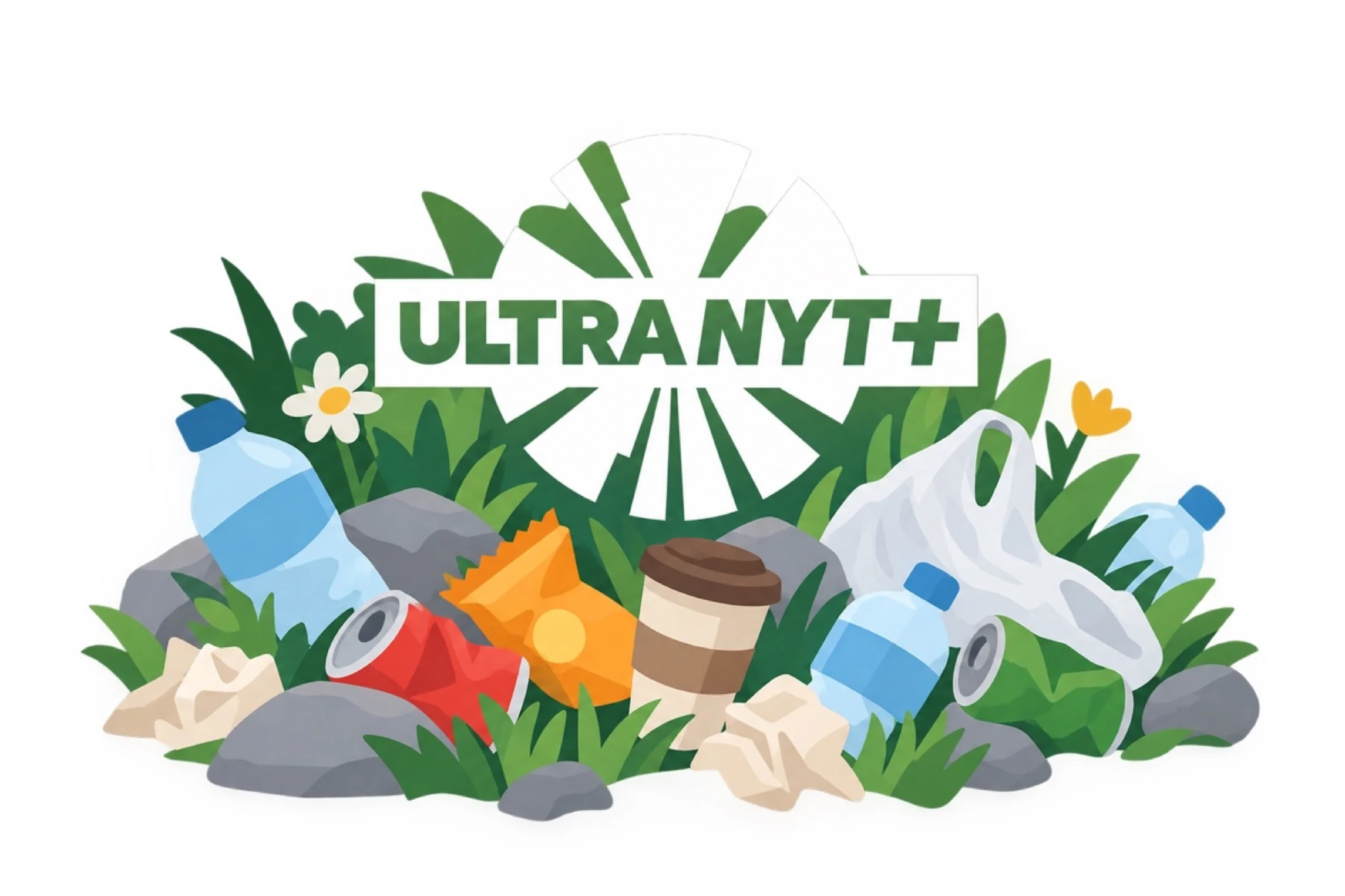
A proposed digital learning universe combining child-friendly news, videos, quizzes, familiar mascots and practical plastic missions. Ultra Nyt was explored as a potential communication partner; the handout describes this as a concept, not an established agreement.
Our contribution
Research and audience understanding
Concept development
Visual communication and digital design
HTML and CSS
Research
What helps children understand and take action?
The primary audience was children aged 8–10, roughly 2nd–4th grade, with schools and teachers as a secondary audience. Desk research explored how to make plastic pollution understandable, motivating and relevant to children's everyday lives, drawing on Mayer's multimedia learning theory and Ryan and Deci's Self-Determination Theory.
This led to three design hypotheses: pair clear language with relevant visuals, give children an active role, and connect digital learning with practical action. The next section shows how these ideas informed the concept.
These hypotheses came from desk research and were not validated with children. The next step is to test comprehension and motivation with children aged 8–10 and their teachers.
Landing page iteration · Eye tracking
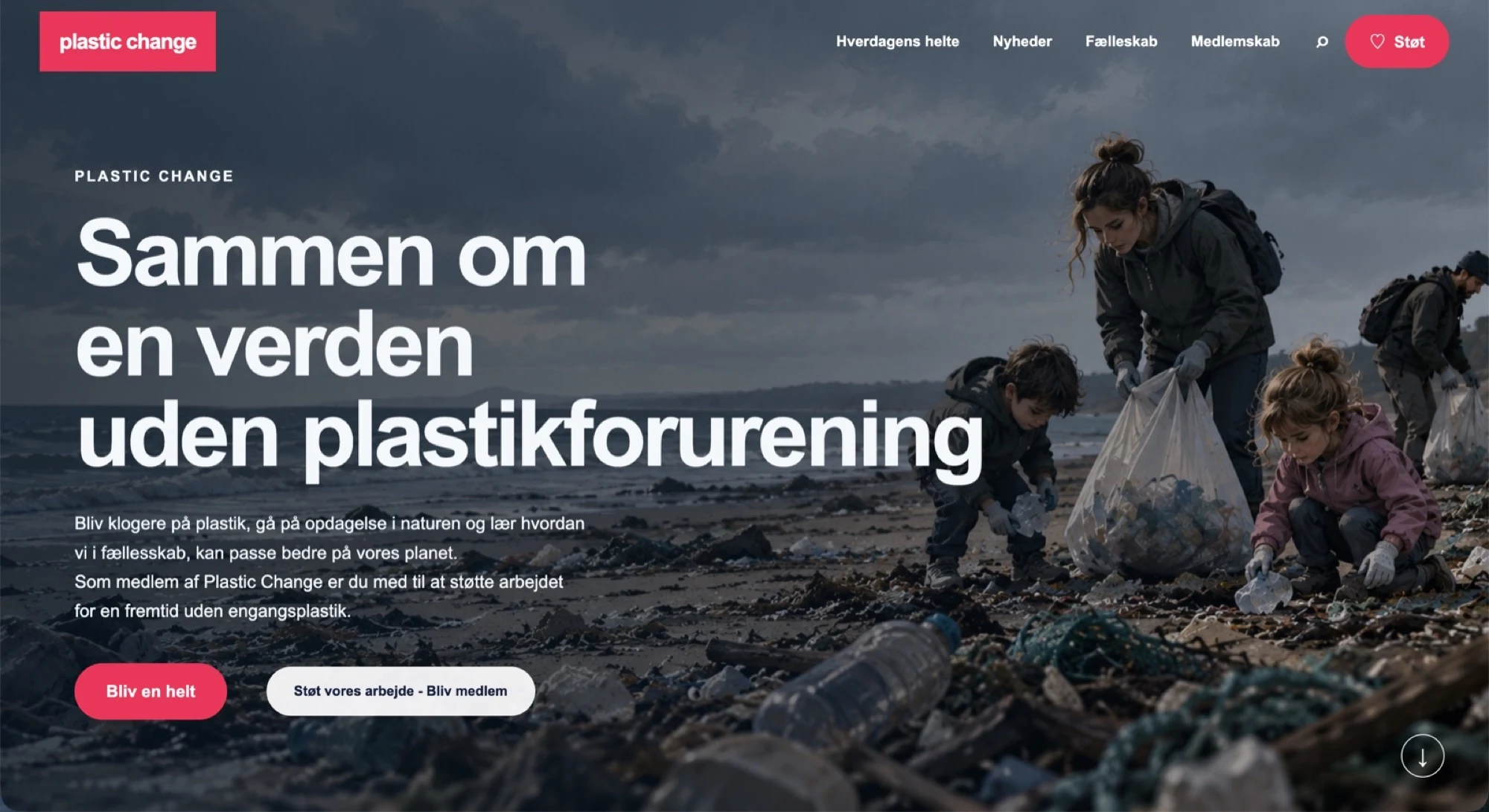
Choosing the hero image
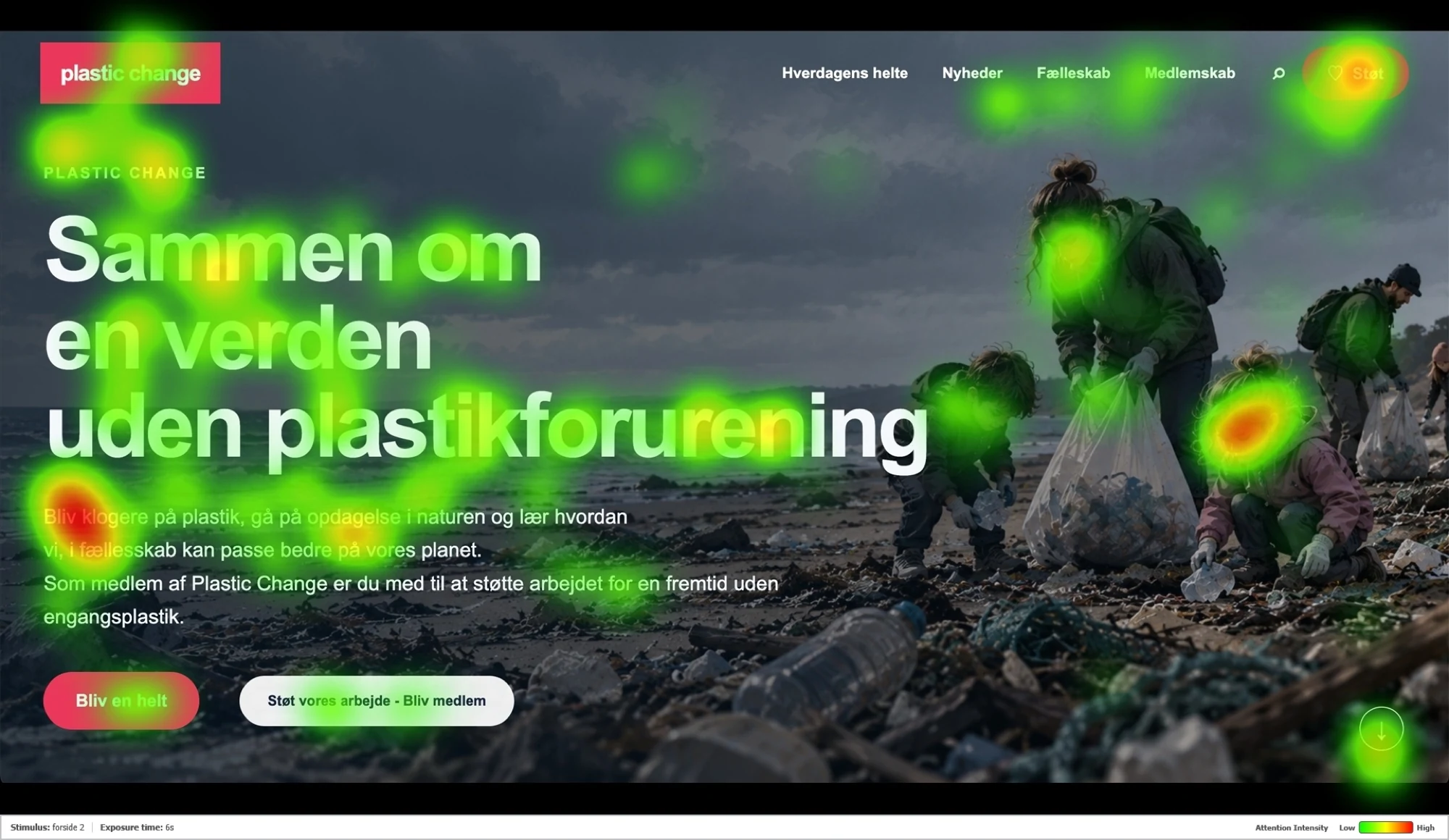
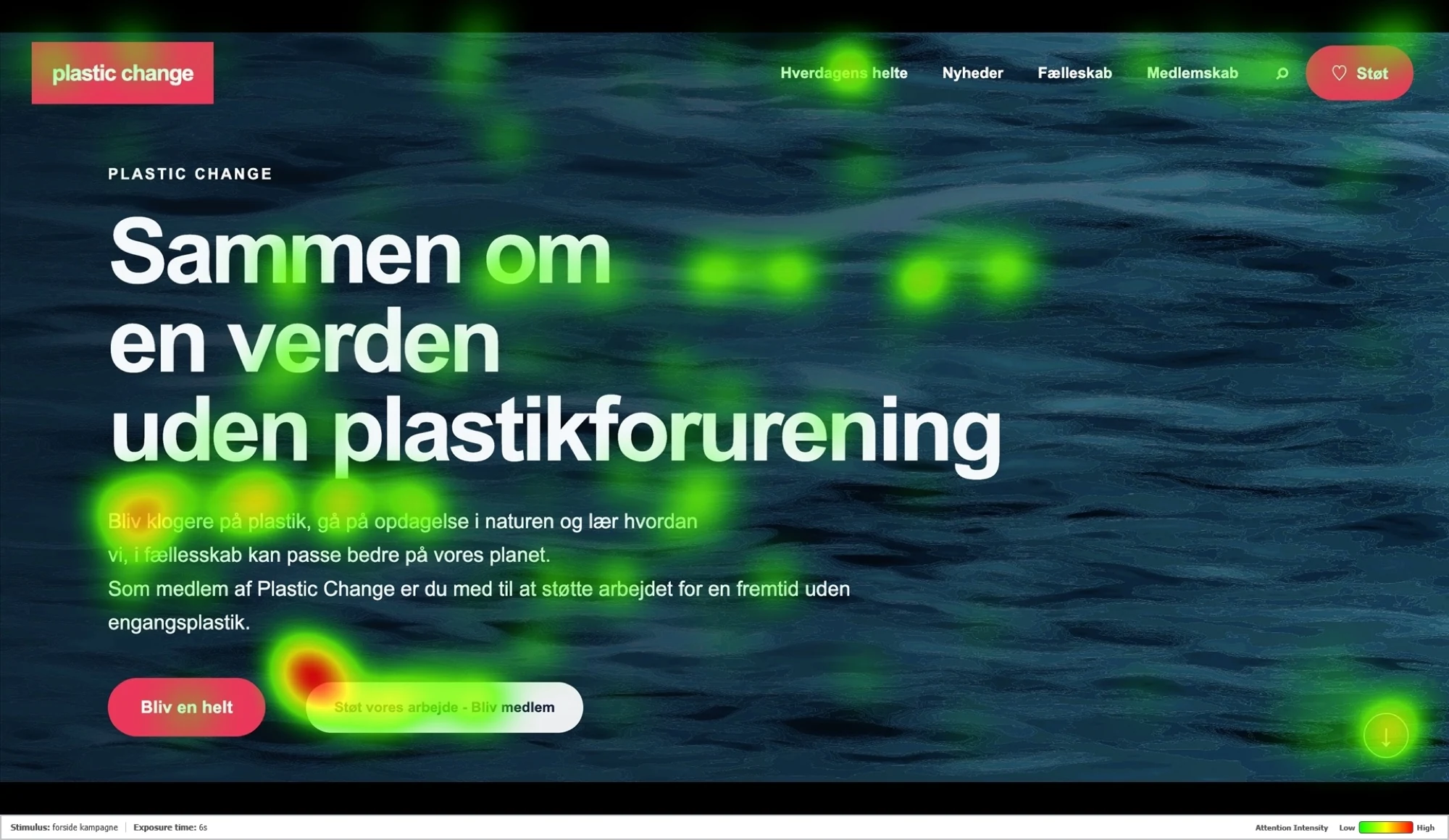
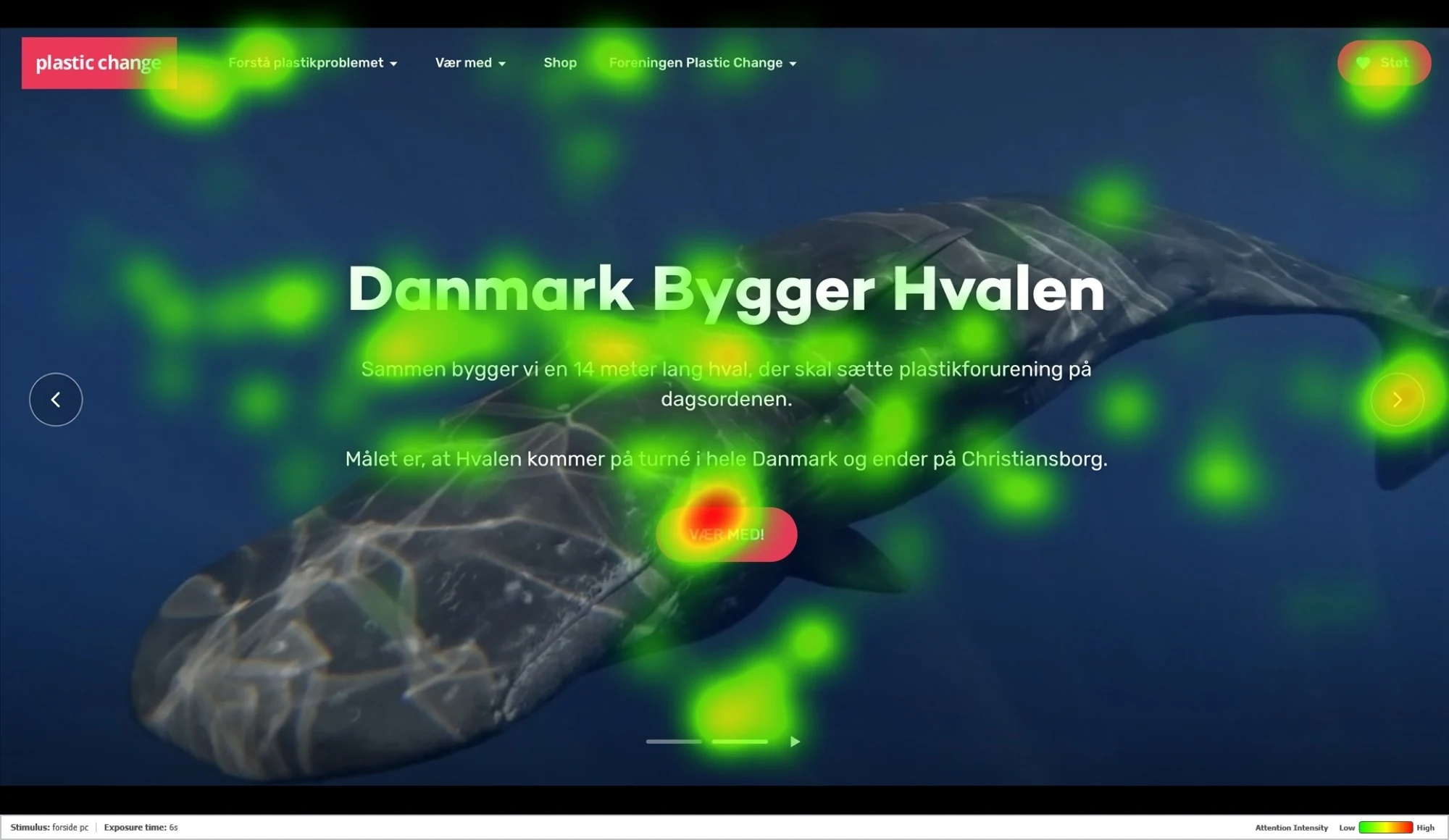
We compared three landingpage hero directions using eyetracking heatmaps. Each stimulus was shown for six seconds. We selected the people-led beach image for the final hero.
Customer journey
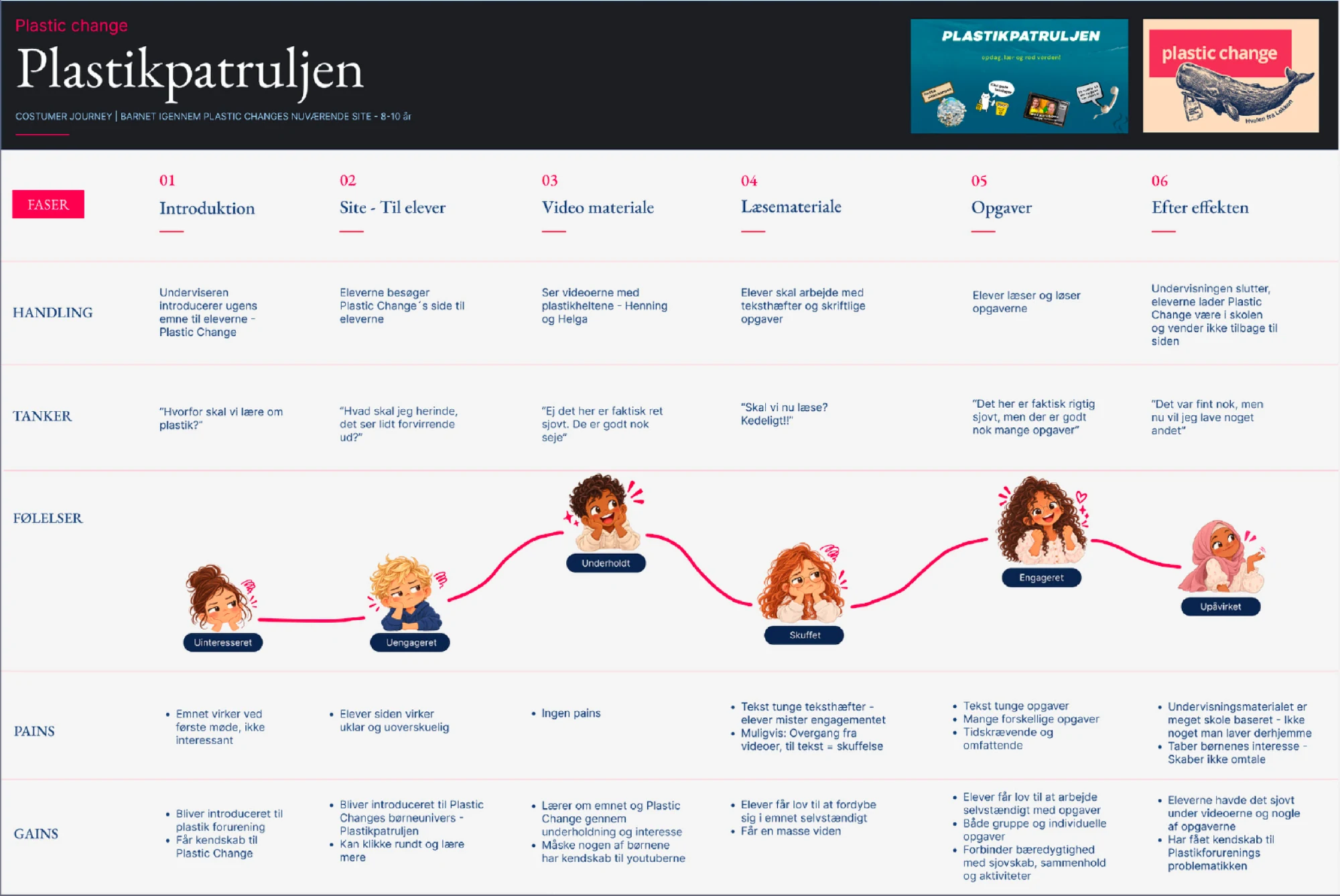
Designing a path from discovery to continued motivation
We mapped the existing journey and developed a new concept journey for Hverdagens helte: discovery, first visit, activity at school, continuing at home, participation and sustained motivation. The journey connects children, teachers and families across digital and physical activities.
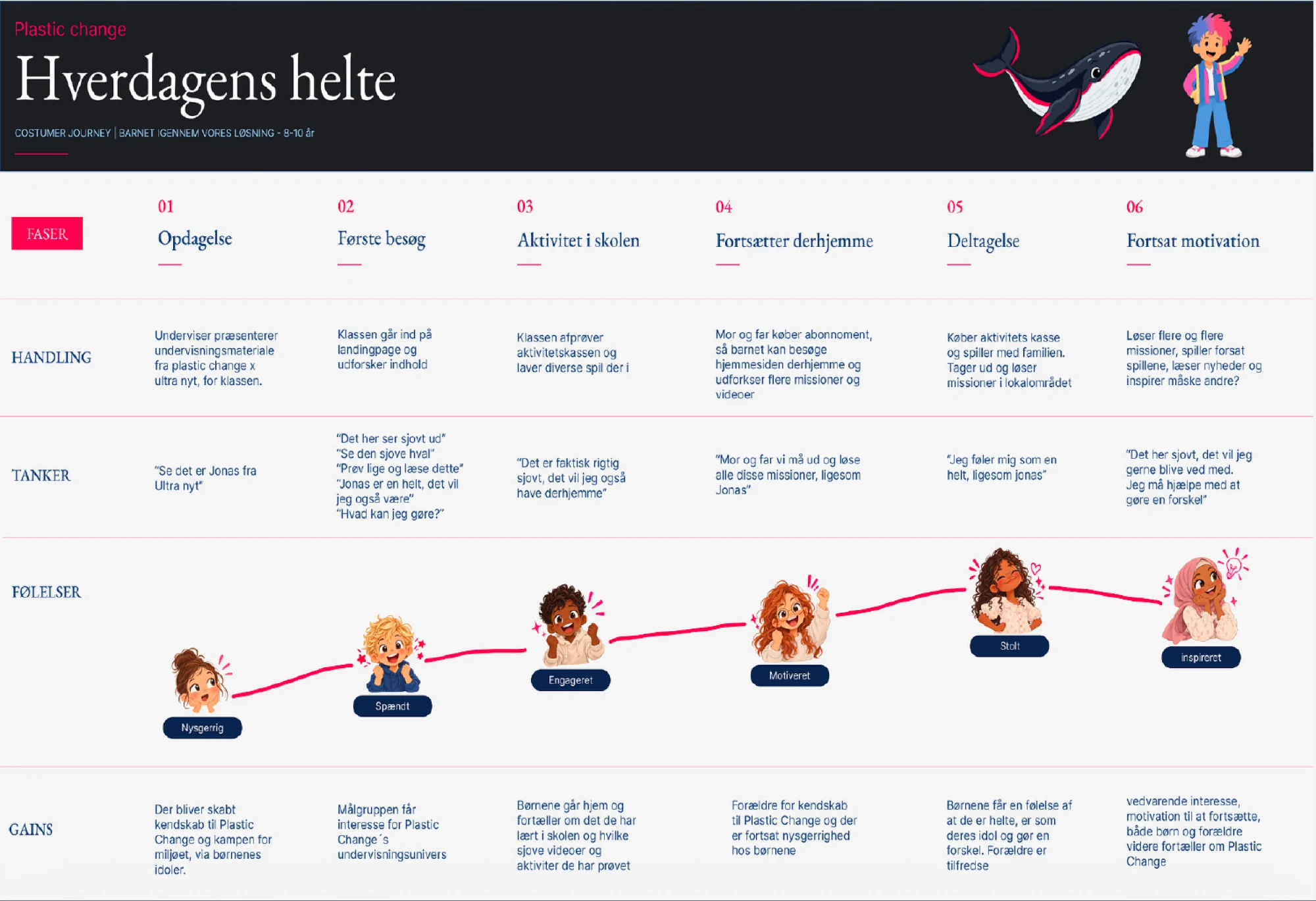
Research insights & hypotheses
From desk research to design decisions
Visuals can support understanding
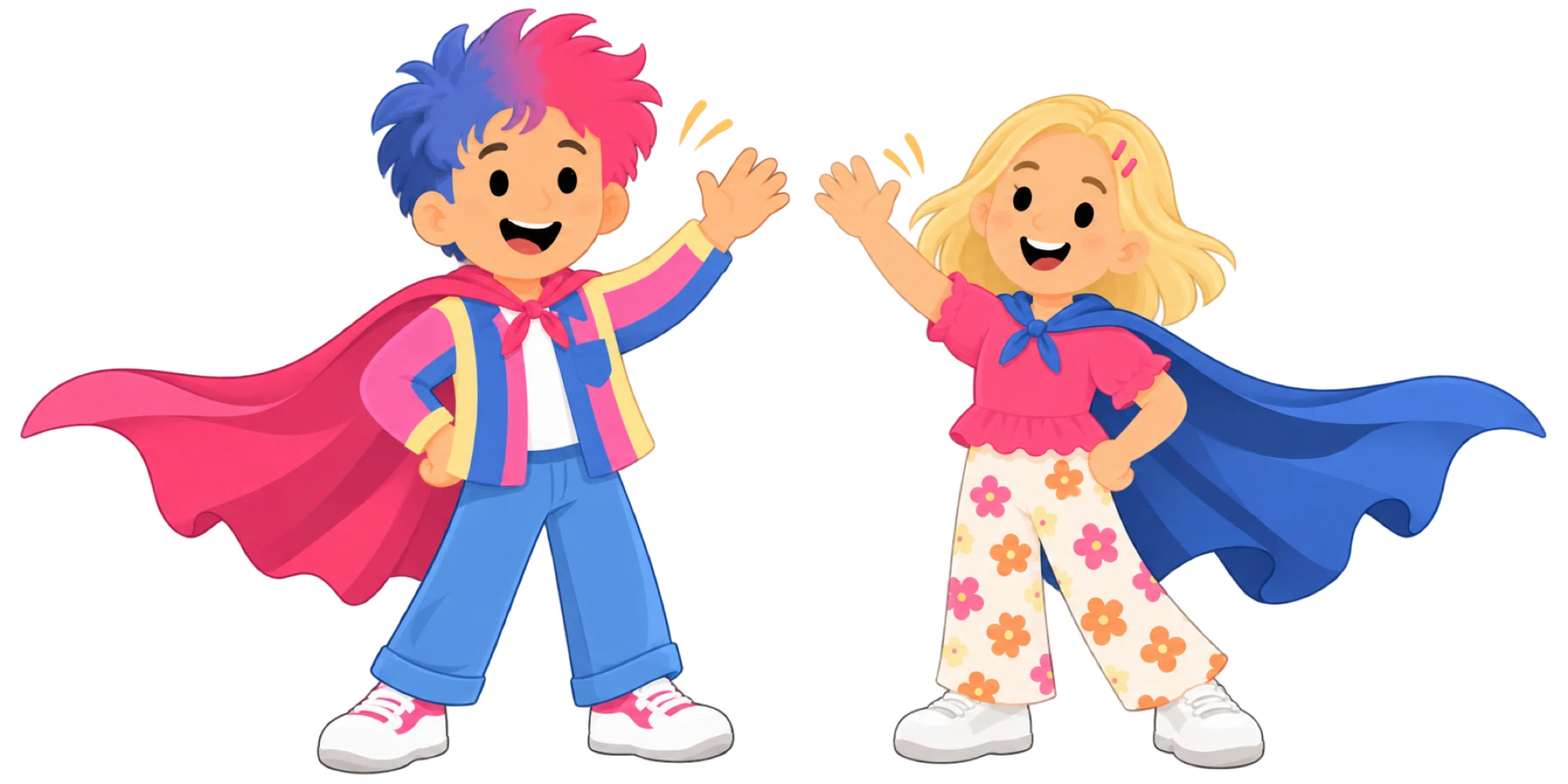
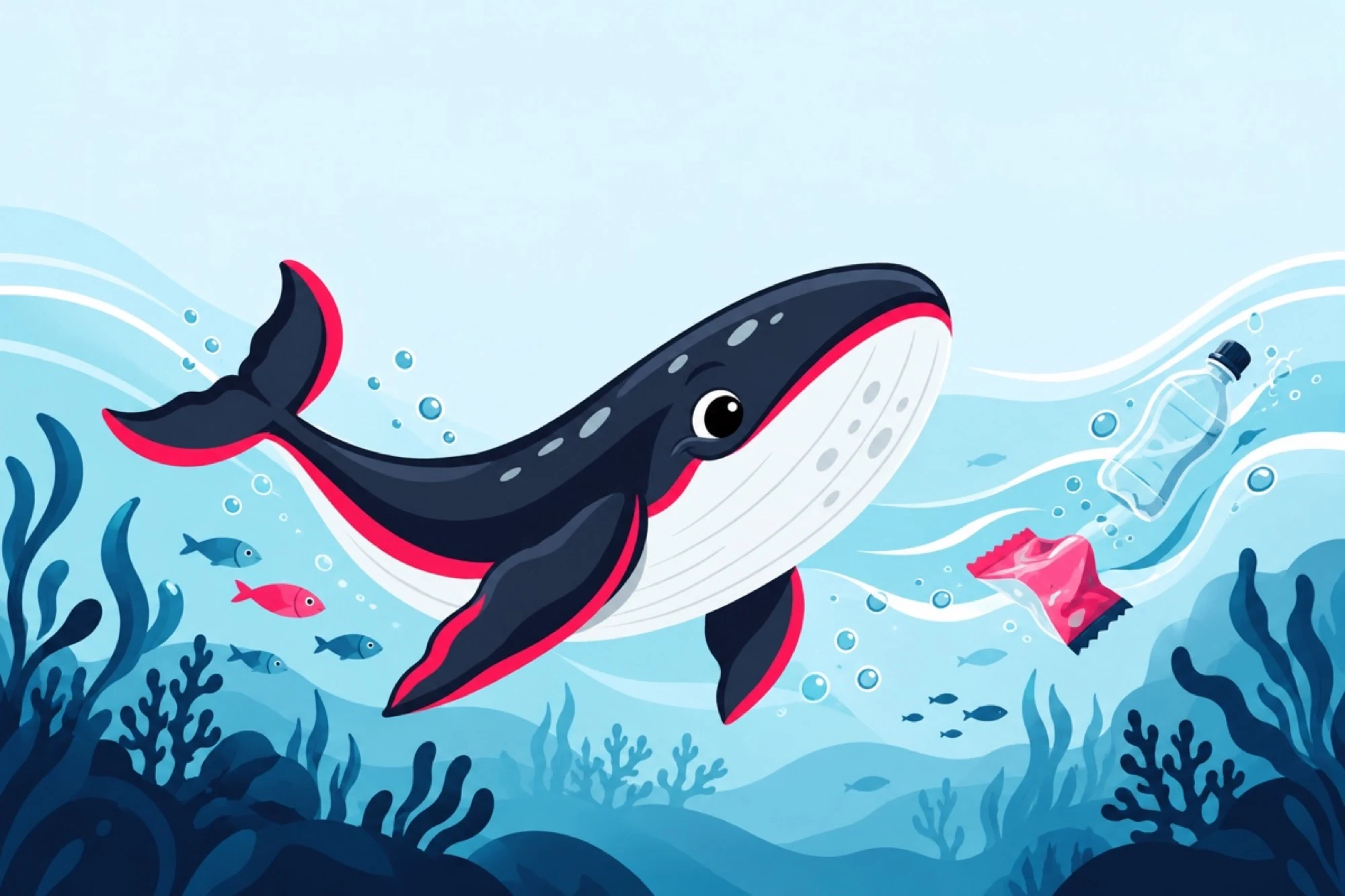
Mayer's multimedia learning theory suggests that relevant images and words can support learning when they are presented thoughtfully. This informed the illustrated universe and recurring whale mascot, designed to create recognition across the experience.
Participation can build motivation
Ryan and Deci's Self-Determination Theory highlights autonomy, competence and relatedness. The missions give children an active role, a shared goal and a way to see how their contribution adds up.
Learning should lead to action
The concept connects digital stories and quizzes with practical activities at school and at home. This bridge from knowledge to action is a design assumption to validate with the target group.
The experience
Learn, explore and take action
Learn
Short news articles and videos make plastic pollution easier to understand.
Explore
Quizzes and a recurring whale mascot guide children through the content and invite them to discover more.
Take action
Interactive missions invite children to find and register plastic waste and contribute to a shared goal.
A sustainable value model
Keeping core learning free
The concept explored how supplementary activities and teaching materials could create ongoing value for Plastic Change while keeping the website's basic learning content free for everyone.
Activity kit
A proposed physical kit with quizzes, memory games, missions and questionnaires for use at home or in the classroom.
Private membership
Proposed at DKK 29 per month, with access to supplementary learning materials and activities.
School membership
Proposed at DKK 1,495 per year to support classroom resources and additional activities. These prices were concept proposals, not an implemented offer.
Process & delivery
From campaign concept to digital learning universe
We combined desk research and audience analysis with concept development, visual design and prototype evaluation. We then built the digital learning universe in HTML and CSS and prepared the supporting UX materials and client handout.
Research & audience analysis
Campaign concept & visual direction
HTML & CSS
Prototype evaluation
Reflection
What we learned
We learned how important it is to translate a complex subject into
clear, age-appropriate experiences without making the issue feel
overwhelming.
Eyetracking helped us compare attention across the
landingpage concepts and informed our choice of the people led hero
image.
It also reminded us that attention alone cannot tell us
whether children understand or feel motivated, so the concept should
be tested with children and teachers in a next iteration.